| Name | Siru Rigid Heddle 60cm 50/10 dpcm Remove | WeavePoint 9 and Complex Drafting 7 Bundle Remove | Siru Rigid Heddle 60cm 30/10 dpcm Remove |
| Image | 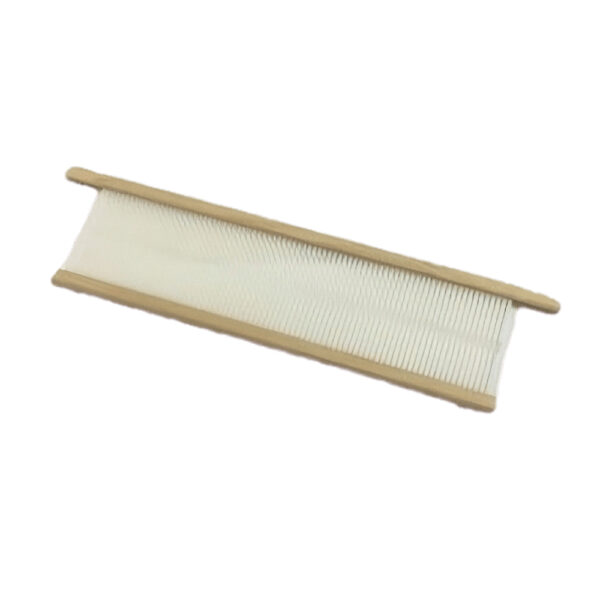 |  | |
| SKU | 4160K+50 | | 4160K+30 |
| Rating | | | |
| Price | £27.00 | £500.00 Original price was: £500.00.£440.00Current price is: £440.00. | £27.00 |
| Stock | Only 1 left in stock
| | Only 1 left in stock
|
| Availability | Only 1 left in stock | | Only 1 left in stock |
| Add to basket | Add to Basket
| Add to Basket
| Add to Basket
|
| Description | Siru Rigid Heddle 60cm weaving width, 50/10 dpcm density. | WeavePoint version 9 with Complex Drafting version 7 bundle.
Download only, no media or printed manuals are supplied.
Your licence will be sent to you by email, usually within 2 working days. You will not be able to use the software until you have entered the licence details.
Use of the software is subject to the WeavePoint software licence which you can read here. | Siru Rigid Heddle 60cm weaving width, 30/10 dpcm density. |
| Additional information |
| Manufacturer |
Toika
|
| Country of Manufacture |
Finland (FI)
|
| Posting dimensions |
75 × 15 × 3 cm |
|
|
| Manufacturer |
Toika
|
| Country of Manufacture |
Finland (FI)
|
| Posting dimensions |
75 × 15 × 3 cm |
|
| <p>Certification</p> | | | |
| <p>Colour Code</p> | | | |
| <p>Colour Group</p> | | | |
| <p>Colour Name</p> | | | |
| <p>Country of Manufacture</p> | | | |
| <p>Fibre</p> | | | |
| <p>Imperial Length</p> | | | |
| <p>Imperial <a class="glossaryLink" aria-describedby="tt" data-cmtooltip="<div class=glossaryItemTitle>Sett</div><div class=glossaryItemBody>The density of the warp ends and weft picks in a woven fabric. Usually expressed as the number of ends per inch or centimetre and the number of picks per inch or centimetre. <br/>For balanced sett cloth the number of ends and picks will be the same.<br/>Note that once removed from the loom the finished sett will likely be different.<br/></div>" href="https://weavingyarn.co.uk/glossary/sett/" data-gt-translate-attributes='[{"attribute":"data-cmtooltip", "format":"html"}]' tabindex='0' role='link'>Sett</a></p> | | | |
| <p>Location</p> | | | |
| <p>Manufacturer</p> | | | |
| <p><a class="glossaryLink" aria-describedby="tt" data-cmtooltip="<div class=glossaryItemTitle>Mercerised</div><div class=glossaryItemBody><!-- wp:paragraph -->Mercerisation is a process devised by John Mercer in 1844 which changes the shape of the fibre and increases both its tensile strength and affinity for dyes. Sodium hydroxide and tensioning of the yarn is used to change the natural spiral structure of the cotton to a straighter, rounded fibre, which gives it a more lustrous look. This is sometimes enhanced by gassing, which burns away the short whiskers of cotton.<br/><!-- /wp:paragraph --></div>" href="https://weavingyarn.co.uk/glossary/mercerised/" data-gt-translate-attributes='[{"attribute":"data-cmtooltip", "format":"html"}]' tabindex='0' role='link'>Mercerised</a></p> | | | |
| <p>Metric <a class="glossaryLink" aria-describedby="tt" data-cmtooltip="<div class=glossaryItemTitle>Count</div><div class=glossaryItemBody>Yarn counts are a way of measuring linear density of a fibre, originally expressed as the number hanks of yarn of a given length that can be spun from a pound of raw fibre. They originated when yarns made from different fibres were produced by separate trades.<br/>On this website counts are expressed as two numbers separated by a slash / . For example, some of our cotton is 8/2. This is a Number English count (Ne) and means that eight hanks of 840 yards could be spun from a pound weight of(...)</div>" href="https://weavingyarn.co.uk/glossary/count/" data-gt-translate-attributes='[{"attribute":"data-cmtooltip", "format":"html"}]' tabindex='0' role='link'>Count</a></p> | | | |
| <p>Metric Length</p> | | | |
| <p>Metric <a class="glossaryLink" aria-describedby="tt" data-cmtooltip="<div class=glossaryItemTitle>Sett</div><div class=glossaryItemBody>The density of the warp ends and weft picks in a woven fabric. Usually expressed as the number of ends per inch or centimetre and the number of picks per inch or centimetre. <br/>For balanced sett cloth the number of ends and picks will be the same.<br/>Note that once removed from the loom the finished sett will likely be different.<br/></div>" href="https://weavingyarn.co.uk/glossary/sett/" data-gt-translate-attributes='[{"attribute":"data-cmtooltip", "format":"html"}]' tabindex='0' role='link'>Sett</a></p> | | | |
| <p>pa_net-length</p> | | | |
| <p>Net Weight</p> | | | |
| <p>Traditional <a class="glossaryLink" aria-describedby="tt" data-cmtooltip="<div class=glossaryItemTitle>Count</div><div class=glossaryItemBody>Yarn counts are a way of measuring linear density of a fibre, originally expressed as the number hanks of yarn of a given length that can be spun from a pound of raw fibre. They originated when yarns made from different fibres were produced by separate trades.<br/>On this website counts are expressed as two numbers separated by a slash / . For example, some of our cotton is 8/2. This is a Number English count (Ne) and means that eight hanks of 840 yards could be spun from a pound weight of(...)</div>" href="https://weavingyarn.co.uk/glossary/count/" data-gt-translate-attributes='[{"attribute":"data-cmtooltip", "format":"html"}]' tabindex='0' role='link'>Count</a></p> | | | |
| <p>Worsted</p> | | | |
